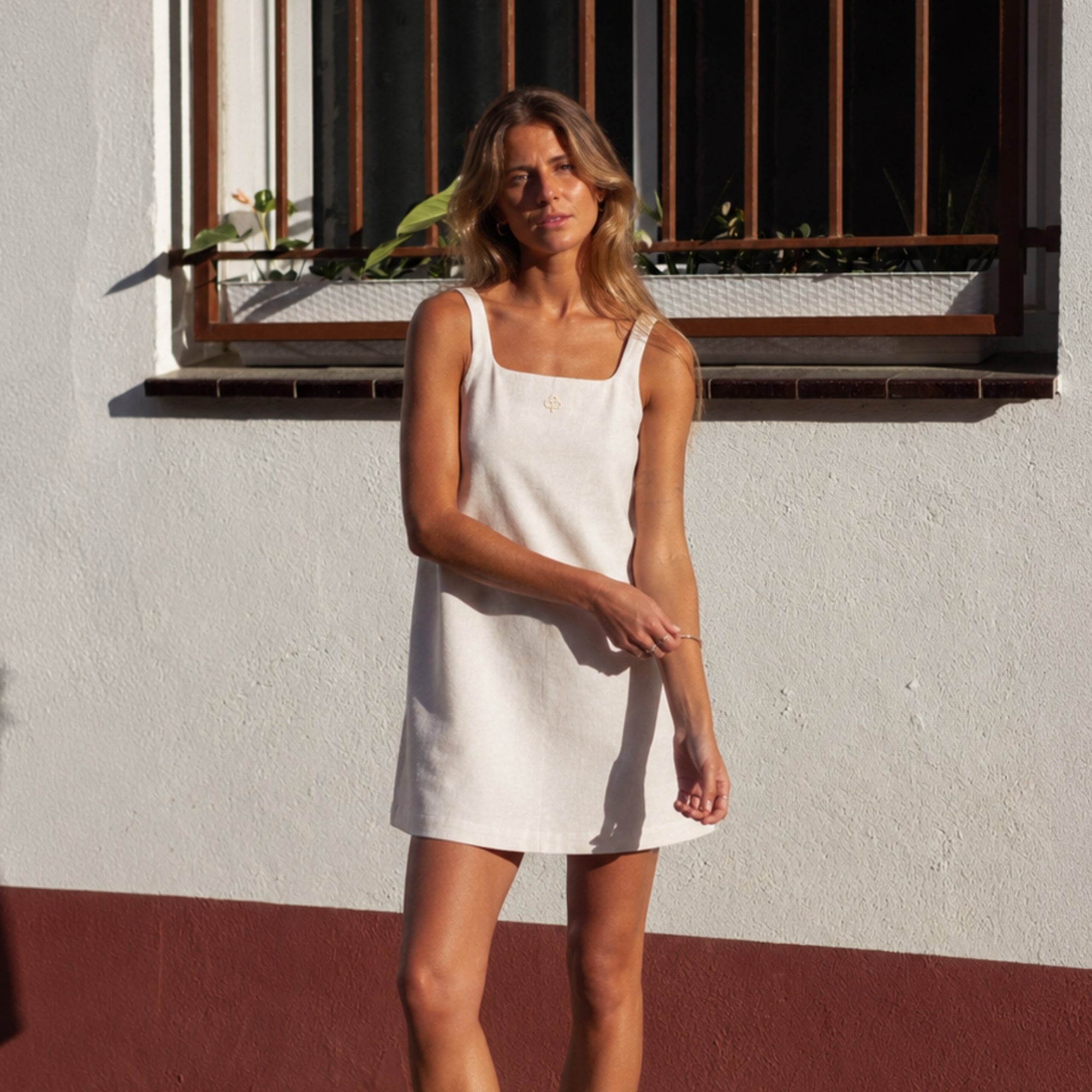
European Flax Certified Linen: What the Label Actually Tells You

Most fabric labels tell you almost nothing. "Linen" on a care tag could mean fibre grown with heavy irrigation in a water-stressed region, or it could mean certified European flax farmed on rainfall alone with a documented chain of custody from field to yarn spinner. Both are linen. The word itself doesn't distinguish them. European Flax certification does. Here's what that standard actually covers—and why it matters more than the fabric name alone—along with how linen compares to cotton, when a blend performs better than pure linen, and how to care for these fabrics so they last.
What linen actually is: from flax plant to fabric
Linen comes from the flax plant, a tall, delicate crop with pale blue flowers that has been cultivated in Europe for over 5,000 years. The strongest fibres run through the plant's stem, and extracting them is labour intensive: after harvesting, the plant must be retted (soaked in water) to break down the woody core, then combed to separate the long fibres that will eventually become yarn.
Europe, particularly Belgium, France and the Netherlands, remains the global centre of linen production. The climate is well suited to flax: cool temperatures and consistent rainfall mean the crop can thrive without heavy irrigation. This geography matters for your wardrobe because European linen benefits from both climate and long established processing expertise.
Historically, linen was part of ordinary European life: sheets, undergarments and work clothes. It was durable, washable and affordable relative to wool or silk. By the 19th century, cotton challenged its dominance, but linen never disappeared from European textile culture. Today, it is useful again for practical reasons: breathability, traceability and long wear.
The fibre itself is remarkable: linen is naturally stronger when wet than dry, it wicks moisture rapidly, and it biodegrades within weeks in soil. These properties make it both practical and ecologically sound.
Why European Flax certification matters: the standard that goes beyond "natural"
European Flax is a certification managed by the European flax and linen industry. It is not a mood or a marketing adjective. It is a verifiable standard with a defined scope. Here is what it verifies:
- No GMOs. Certified flax is grown from non GMO seed using controlled agricultural practices.
- No irrigation. European Flax crops rely entirely on rainfall, which is why they grow only in regions with adequate water. This single rule eliminates the water stress burden of irrigated flax in drier regions.
- Traceability. From seed to field to retting facility to yarn spinner, the fibre path is documented and can be audited.
- European agricultural standards. The certification only applies to flax grown in the EU, where crop rotation requirements, soil protection rules, and labour standards are enforced by law.
- Genetic purity. No crossbreeding with GM varieties; the seed stock is protected and managed by the industry association.
Why not just call it "natural" linen? Because "natural" is not specific enough. Linen can be natural and still come from opaque sourcing or water stressed growing conditions. European Flax certification gives you a narrower, more useful claim: European origin, traceable fibre and defined agricultural requirements.
When a Pamuuc fabric uses European Flax certified linen, we state it with the product or collection information. When linen is blended with cotton, the blend still needs context: what the ratio is, where the fibres come from and which certifications apply.
Linen vs cotton: the honest comparison
Both are plant based cellulose fibres, both breathe well, but they behave very differently in a garment, and the differences matter for how you'll actually wear them.
Breathability and temperature regulation: Linen edges out cotton slightly. Both absorb and release moisture rapidly, but linen's hollow fibre structure gives it a small advantage in humidity management. In hot weather, you'll notice the difference. In mild climates, it's negligible.
Weight and drape: Linen is naturally structured and crisp when new. It drapes with a distinctive stiffness that some love and others find unforgiving. Cotton is softer and more fluid from the start. If you want a garment that feels gentle immediately, pure linen will require a few washes to soften.
Wrinkles: This is where linen's reputation precedes it. Linen wrinkles visibly, easily, and dramatically, especially in warm, humid conditions where moisture reactivates the creases. Cotton wrinkles too, but less noticeably. If you iron obsessively, linen will frustrate you. If you view wrinkles as part of a garment's honest wear, linen's texture becomes part of its charm.
Durability: Linen is known for strength, especially when wet. With good weaving and care, linen garments can last for many years and often improve in feel as they soften. Cotton also softens with wear, but lower quality cotton can lose shape or thin faster.
Sustainability in production: Both are plant based, but conventional cotton can be pesticide and water intensive depending on where and how it is grown. European Flax certified linen gives you stronger traceability around origin and rainfall based cultivation. If you're comparing certified linen to certified organic cotton, the better choice depends on the whole garment: fibre, dyeing, sewing, shipping and use.
The honest summary: choose pure linen if you want maximum durability and don't mind visible wrinkles and an initial stiffness. Choose cotton if you want softness from day one and prefer minimal wrinkling. Choose a blend if you want the best of both.
Why cotton and linen blends work better than pure linen for everyday clothing
A 50/50 or 60/40 cotton and linen blend solves almost every complaint people have about pure linen while retaining its durability and breathability. Here's why the blend works:
Softness from the start: Cotton contributes a gentler handfeel. A garment made from a cotton and linen blend feels comfortable immediately, without the stiffness of pure linen that requires multiple washes to soften.
Structure from linen: Linen contributes crispness and shape retention. A 60% cotton / 40% linen blend can hold its silhouette better than pure cotton, which may lose shape after repeated washing and wearing.
Fewer visible wrinkles: Cotton softens the more dramatic creasing of pure linen. You'll still see wrinkles, but they tend to be gentler and less pronounced.
Durability that approaches linen: The blend retains much of linen's longevity advantage while making the garment easier to wear every day. A well made cotton and linen shirt can last for many seasons with proper care.
Easier care: The cotton makes the blend slightly more forgiving during washing and storage. You can tumble dry a cotton and linen blend on low heat; pure linen prefers line drying to preserve fibre integrity.
This is why we use cotton and linen blends for most of our garments. Pure linen appears in a few pieces designed specifically for summer wear and high heat, where its advantages shine. But for everyday shirts, dresses, and layering pieces, a 55/45 or 60/40 blend delivers the material character your wardrobe actually needs.
How to care for linen and cotton linen garments
The best part about linen: it improves with proper care. Here's how to extend the life of your pieces and help them develop their best character over time.
Washing temperature and frequency: Wash in cold to warm water (30 to 40°C). Hot water can damage the fibres and unnecessary heat is wasted energy. Linen can tolerate frequent washing, it gets stronger when wet, not weaker. Wash when actually soiled; light wear doesn't require washing. Turning garments inside out reduces pilling and fading.
Detergent: Use a gentle, plant based detergent without optical brighteners (which can yellow linen over time). Avoid fabric softener, it coats the fibres and reduces breathability. Linen doesn't need softening; it naturally softens with wear.
Drying: Line dry whenever possible. If you must machine dry, use the lowest heat setting or air dry cycle. Direct sunlight on white and light linen can cause yellowing over time; dry in shade or indirect light. Linen dries quickly compared to cotton, usually within 2 to 3 hours on a clothesline.
Wrinkle management: Accept that pure linen will wrinkle. You can iron on medium heat with a damp cloth, or steam gently. For cotton and linen blends, light ironing on medium heat reduces wrinkles without effort. Hang garments to air out for 24 hours before storing, this releases creases naturally.
Storage: Fold loosely or hang on wooden hangers (avoid wire or plastic, which can create crease marks). Store in a cool, dry place away from direct sunlight. Linen stored properly can last indefinitely. Don't use plastic bags, which trap moisture; use breathable cloth bags if you're storing for seasons.
How the fabric improves with wear: Linen becomes softer, more flexible and more comfortable the more you wear and wash it. This is not degradation. It is the fibres settling and relaxing into natural folds, which is why linen pieces often become favourites over time.
What to look for when buying linen clothing: certifications, questions, and red flags
With linen's resurgence, marketing noise has increased. Here's how to distinguish genuine quality from greenwashing.
Certifications to check: Look for European Flax, OEKO-TEX (which certifies dyes and finishing chemicals), or Global Organic Textile Standard (GOTS) on cotton. If a brand uses certified linen, they'll mention it clearly. The absence of certification doesn't mean the linen is bad, but certification gives you verification. We use European Flax certified linen and OEKO-TEX certified dyes where we've confirmed them; we name the certifications rather than hide behind vague claims.
Questions to ask brands: Where is the linen grown? Which country processes and spins it? Who manufactures the finished garment? A transparent brand should be able to answer these questions. We name production partners where we can, including Sompunt for knitwear and our Barcelona area cut and sew network, because a supply chain is only useful to you when it is specific.
Red flags in linen marketing: Avoid "eco friendly linen" without any specific certification or origin. Avoid "sustainable linen" paired with claims about water savings that lack numbers or third party verification. Avoid brands that position linen as inherently superior to all other fabrics without acknowledging tradeoffs (linen wrinkles, it can shrink slightly if not cared for, it costs more than conventional cotton). Honest brands name limitations. Greenwashing brands only celebrate.
Blend transparency: If a brand sells a cotton and linen blend, they should specify the exact ratio. "Cotton and linen blend" is vague marketing. "55% organic cotton, 45% European Flax linen" is honest. Ask, and demand clarity.
Price: Certified linen usually costs more than uncertified linen, and construction still matters. If a linen garment is priced like a disposable polyester garment, ask what has been compromised: fibre quality, certification, sewing, wages or margin.
We design and price our pieces for longevity. A linen or cotton and linen shirt costs more upfront, but if it is worn often and cared for well, the cost per wear can drop significantly over years of use.
Finding your linen story
Linen is a fabric with a long agricultural and textile history. European Flax certified linen gives that history a traceable present: specific growing regions, documented processing and a clearer way to ask where your clothes come from.
If you want to understand exactly how we source, produce, and design our pieces, visit our transparency page. For more on sustainable fashion choices and common questions about fabrics and impact, read our sustainable fashion FAQ. And if you're curious about how our preorder model supports slower, more intentional production, explore how we make to order.
Choose your next linen piece with that context in mind: origin, blend, construction and care all matter.
If you want to see these fabric choices in practice, start with the Linen Shirt, the Square Neck Linen Top, or the Straight Leg Linen Pants.